Wednesday, 14 February 2018

Digital Instrument Cluster Market – Industry Analysis and Forecast 2026

Market Scenario

Digital Instrument Cluster Market is expected to reach 9.92 Billion by 2026 from 1.72 Billion in 2017 at CAGR of 19.11 % (Detailed analysis of the market CAGR is provided in the report). Digital Instrument Cluster is a set of instrumentation, including the speedometer that is displayed with a digital readout rather than with the traditional analog gauges. Digital Instrument Cluster market is segmented by display type, display size, vehicle type, electric vehicle, embedded technology and geography. The market by display type is segmented by liquid crystal display (LCD), thin film transistor-liquid crystal display (TFT-LCD) and organic light emitting diode (OLED). The market on the basis of display size includes 5–8 Inch, 9–11 Inch and >12 Inch. Vehicle type market segment is classified as Passenger Cars and Commercial Vehicles. Electric vehicle market is segmented as Battery Electric Vehicle (BEV), Fuel Cell Electric Vehicle (FCEV), Plug-In Hybrid Electric Vehicle (PHEV) and Hybrid Electric Vehicle (HEV).The embedded technology covered in this report are AI Based and Non-AI-Based. The market on the basis of geography is segmented by North America, Europe, Asia-Pacific, Middle East & Africa and Latin America. Growing Demand for Advanced Cluster Technology by OEMs is trending the overall Digital Instrument Cluster market. However, High risk of Cyber threats will restrain the market growth.Highest revenue generating region is Europe 2016; high proportion of passenger vehicles in the total vehicle production and growing demand for luxury vehicles and electric vehicles are driving the market in this region However, APAC is going to emerge as one of the higher growth region in forecast period. Digital Instrument Cluster Market

Key Highlights:

• Assessment of market definition along with the identification of key players and analysis of their strategies to determine the competitive outlook of the market, opportunities, drivers, restraints and challenges for this market during the forecast period • Complete quantitative analysis of the industry from 2016 to 2026 to enable the stakeholders to capitalize on the prevailing market opportunities • In-depth analysis of the industry on the basis of market segments, market dynamics, market size, competition & companies involved value chain • Digital Instrument Cluster market analysis and comprehensive segmentation with respect to the display type, display size, vehicle type, electric vehicle, embedded technology and geography to assist in strategic business planning • Digital Instrument Cluster market analysis and forecast for five major geographies North America, Europe, Asia pacific, Middle East & Africa, Latin America and their key regions Years that have been considered for the study are as follows: • Base Year – 2016 • Estimated Year – 2017 • Forecast Period – 2017 to 2026 For company profiles, 2016 has been considered as the base year. In cases, wherein information was unavailable for the base year, the years prior to it have been considered

Research Methodology

Bloomberg, Hoovers, Factiva are some of the sites that are being referred to gain insights about Digital Instrument Cluster market. Experts from top manufacturing companies along with other stakeholders have been considered. This is done to validate and collect critical information for evaluating trends related to this market during the forecast period. Top-down and bottom-up approaches have been used to estimate the global and regional size of this market. Data triangulation techniques along with other comparative analysis are also used to calculate the exact size of the Digital Instrument Cluster market globally Digital Instrument Cluster Market Key Players in the Digital Instrument Cluster Market Are: • Bosch • Panasonic • Denso • Toshiba • Delphi • Magneti Marelli • Yazak • Nvidia • IAC Group • Visteon • Nippon Seiki Key Target Audience: • Research and Consulting Firms as well as Venture capitalists, private equity firms, and startup companies • Digital instrument cluster manufacturers • Digital Instrument Cluster Market Investors • Independent and authorized dealers of digital instrument cluster • Vehicle manufacturers and Cockpit electronics manufacturers • Distributors and suppliers of digital instrument cluster • Traders and Stakeholders Operating In the Sector Scope of the Report: Research report categorizes the Digital Instrument Cluster market based on display type, display size, vehicle type, electric vehicle, embedded technology and geography (region wise). Market size by value is estimated and forecasted with the revenues of leading companies operating in the Digital Instrument Cluster market with key developments in companies and market trends Digital Instrument Cluster Market, By Display Type • Liquid Crystal Display (LCD) • Thin Film Transistor-Liquid Crystal Display (TFT-LCD) • Organic Light Emitting Diode (OLED) Digital Instrument Cluster Market, By Display Size • 5–8 Inch • 9–11 Inch • >12 Inch Digital Instrument Cluster Market, By Vehicle Type • Passenger Cars • Commercial Vehicles Digital Instrument Cluster Market, By Electric Vehicle • Battery Electric Vehicle (BEV) • Fuel Cell Electric Vehicle (FCEV) • Plug-In Hybrid Electric Vehicle (PHEV) • Hybrid Electric Vehicle (HEV) Digital Instrument Cluster Market, By Embedded Technology • AI Based: Digital Instrument Cluster • Non-AI-Based: Digital Instrument Cluster Digital Instrument Cluster Market

Electric Vehicle Market – Industry Analysis and Forecast 2026

Market Scenario

Electric Vehicle Market is expected to reach 551.16 Billion by 2026 from 122.38 Billion in 2017 at CAGR of 18.2 % (Detailed analysis of the market CAGR is provided in the report). Electric vehicles are working on batteries via electric motors in order to transport machines for passengers as well as goods. Electric vehicles are powered either by a collector system through electricity from charging station deployments or can be charged by self-charging devices such as regenerative braking systems, turbochargers, etc. Globally, the new registrations of electric cars increased by 75% from 2016 to 2017. Tesla Motors, Inc. have added Model S, introduced on June 22, 2012, the fastest electric car to the global automotive fleet and propelled the market to the next level. The crucial factors for rise in electrical vehicle market worldwide are the initiatives taken by various governments in recent period to reduce carbon emission by setting the exact deadlines to ban the petrol and diesel vehicles. 1. UK has decided to have six central streets restricted access to non-zero emissions cars Zero Emissions Zone (ZEZ) From 2020 and this will expand to the entire U.K. region between 2025 and 2040 2. “Indian government is planning to become a 100 percent electric vehicle nation within 14 years” - Piyush Goyal (India’s Power Minister) 3. Paris to ban all petrol and diesel cars by 2030 - Christophe Najdovski (transport official of Paris City) Government regulations to reduce the amount of greenhouse gases emitted by vehicles, high fuel efficiency offered by the electric vehicles and soundless operation of the electric vehicles are trending the overall Electric Vehicle market. However, Electric vehicles provide excellent torque at low speeds but its performance drops at higher speed in comparison with conventional vehicles, this difference in performance will restrain the market growth. The highest revenue generating region is APAC in 2017; followed by North America. APAC is estimated to grow at one of the highest rate during 2017–2026. In Asia-Pacific region China is expected to register the highest growth.

Key Highlights:

• Assessment of market definition along with the identification of key players and analysis of their strategies to determine the competitive outlook of the market, opportunities, drivers, restraints and challenges for this market during the forecast period • Complete quantitative analysis of the industry from 2017 to 2026 to enable the stakeholders to capitalize on the prevailing market opportunities • In-depth analysis of the industry on the basis of market segments, market dynamics, market size, competition & companies involved value chain • Electric Vehicle market analysis and comprehensive segmentation with respect to the type, vehicle type, and geography to assist in strategic business planning • Electric Vehicle market analysis and forecast for five major geographies North America, Europe, Asia pacific, Middle East & Africa, Latin America and their key regions

Research Methodology

Research methodology used in this report contains various secondary sources including directories such as Society of Manufacturers of Electric Vehicles, National Institute of Standards and Technology (NIST), International Energy Agency (IEA), Institute of Electrical and Electronics Engineers (IEEE). Bloomberg, Hoovers, Factiva are some of the sites that are being referred to gain insights about Electric Vehicle market. Experts from top manufacturing companies along with other stakeholders have been considered. This is done to validate and collect critical information for evaluating trends related to this market during the forecast period. Top-down and bottom-up approaches have been used to estimate the global and regional size of this market. Data triangulation techniques along with other comparative analysis are also used to calculate the exact size of the market globally. Electric Vehicle Market

Key Players in the Electric Vehicle Market Are:

• BMW Group • Telsa • Toyota Motor Corporation • Nissan Motor Corporation • Volkswagen AG • General Motors • Daimler AG • Energica Motor Company S.P.A • Ford Motor Company • . BYD Company Motors

Key Target Audience:

• Research and Consulting Firms as well as Venture capitalists and startup companies • solutions providers and Component suppliers • Software, technology providers and Electric Vehicle Market Investors • Component and device suppliers and distributors • Government , Legislative and Regulatory Bodies • Associations, organizations, forums, and alliances related to transportation industries • Traders and Stakeholders Operating In the Sector • Electric Vehicle related service providers Scope of the Report: Research report categorizes the Electric Vehicle market based on type, vehicle type, and geography (region wise). Market size by value is estimated and forecasted with the revenues of leading companies operating in the Electric Vehicle market with key developments in companies and market trends
Electric Vehicle, By Type • Battery Electric Vehicle • Hybrid Electric Vehicle • Plug-In Hybrid Electric Vehicle Electric Vehicle, By Vehicle Type • Two Wheeler • Passenger Car • Commercial Vehicle o Light Commercial Vehicle o Heavy Commercial Vehicle
Electric Vehicle Market

Semi-Autonomous and Autonomous Vehicles Market – Industry Analysis and Forecast 2030

Market Scenario

The semi-autonomous vehicles market, in terms of volume, is projected to grow at a CAGR of 21.2% from 2017 to 2022 and Autonomous Vehicles market in terms of volume, is projected to grow at a CAGR of 67.32% from 2025 to 2030. In this study for semi-autonomous vehicles, 2017 has been considered as the base year and 2018–2026 as the forecast period for estimating the market size. However, for autonomous vehicles, 2024 has been considered the base year and 2025–2030 as the forecast period for estimating the market size. The market volume is 10.78 Million Units in 2017 for semi-autonomous vehicles and estimated to be 0.18 Million Units in 2024 for autonomous vehicles.

Need of Semi-Autonomous and Autonomous Vehicles

• According to Bob Joop Goos, Chairman (International Organization for Road Accident Prevention) Over 90 per cent of accidents accounting for human error • As per data provided by WHO Without sustained action, road traffic crashes are predicted to become the seventh leading cause of death by 2030 According to maximize market research more than 92% of road accidents across the globe are caused primarily due to human errors. With the adoption of autonomous vehicles, also known as driverless vehicles could save significant number of lives. Autonomous vehicles can drive themselves without any human intervention, capable to read and sense the environment and operates without human input with the employment of inbuilt software, sensors, and communication systems. Many major players are aggressively focusing on the development of semi-autonomous and fully autonomous vehicles to satisfy customer demand and to remain competitive. Rising concerns about vehicle safety, security and efficient driving experience and increasing Integration of Technology in automotive sector are trending the overall semi-autonomous and autonomous vehicles market. However, High system integration Cost and less Consumer acceptance to automation will restrain the market growth. Highest revenue generating region is North America 2016; Followed by Europe. Increased customer base and high disposable income of end-users in these regions are driving the demand for high-end vehicles, and ultimately lead to increasing R&D innovations by local and international automotive OEMs in North America and Europe region.

Key Highlights:

• Assessment of market definition along with the identification of key players and analysis of their strategies to determine the competitive outlook of the market, opportunities, drivers, restraints and challenges for this market during the forecast period • Complete quantitative analysis of the industry from 2017 to 2026 to enable the stakeholders to capitalize on the prevailing market opportunities • In-depth analysis of the industry on the basis of market segments, market dynamics, market size, competition & companies involved value chain • Market analysis and comprehensive segmentation of Semi-Autonomous market based on level of automation, component, ADAS features, fuel type and geography (region wise) and Autonomous Vehicles market based on component, fuel type and geography (region wise) and geography to assist in strategic business planning • Semi-Autonomous and Autonomous Vehicles market analysis and forecast for five major geographies North America, Europe, Asia pacific, Middle East & Africa, Latin America and their key regions

Research Methodology

Research methodology used in this report contains various secondary sources including International Organization of Motor Vehicle Manufacturers (OICA), China Association of Automobile Manufacturers (CAAM). Bloomberg, Hoovers, Factiva are some of the sites that are being referred to gain insights about Semi-Autonomous and Autonomous Vehicles market. Experts from top manufacturing companies along with other stakeholders have been considered. This is done to validate and collect critical information for evaluating trends related to this market during the forecast period. Top-down and bottom-up approaches have been used to estimate the global and regional size of this market. Data triangulation techniques along with other comparative analysis are also used to calculate the exact size of the Semi-Autonomous and Autonomous Vehicles market globally. Semi-Autonomous and Autonomous Vehicles Market Key Players in the Semi-Autonomous and Autonomous Vehicles Market Are: • Infineon Technologies • Continental • Robert Bosch • NXP Semiconductor • Texas Instruments • Renesas Electronics • Valeo • Magna • ZF • Delphi • Denso • Cisco

Key Target Audience:

• Research and Consulting Firms as well as Venture capitalists and startup companies • Component and Raw Material Suppliers • Tier 1 manufacturers & Automotive associations • Government , Legislative and Regulatory Bodies • Vehicle manufacturers/OEMs Traders and Stakeholders Operating In the Sector • Automotive software providers • Technology Providers & Software Developers • Service Suppliers Scope of the Report : Research report categorizes the Semi-Autonomous vehicle market based on level of automation, component, ADAS features, fuel type, and geography (region wise) and Autonomous Vehicles market based on component, fuel type, and geography (region wise) Market size by value is estimated and forecasted with the revenues of leading companies operating in the Semi-Autonomous and Autonomous Vehicles market with key developments in companies and market trends
Semi-Autonomous Vehicle Market, By Level of Automation
• Level 1 • Level 2 • Level 3
Semi-Autonomous and Autonomous Vehicle Market, By Component
• Semi-Autonomous Vehicle Market, By Component Type o Artificial Intelligence (AI) o Camera o LiDAR o Radar o Ultrasonic Sensor • Autonomous Vehicle Market, By Component Type o Camera o LiDAR o Radar o Ultrasonic Sensor
Semi-Autonomous Vehicle Market, By ADAS Features
• Lane Assist (LA) • Crash Warning System (CWS) • Blind Spot Detection (BSD) • Adaptive Cruise Control (ACC) • Smart Park Assist (SPA) • Cross Traffic Alert (CTA) • Automatic Emergency Braking (AEB) • Traffic Jam Assist (TJA) • Intelligent Park Assist (IPA)
Semi-Autonomous and Autonomous Vehicles Market, By Fuel Type
• Semi-Autonomous Vehicle Market, By Fuel Type o Internal Combustion Engine (ICE) o Hybrid Electric Vehicle (HEV) o Battery Electric Vehicle (BEV) • Autonomous Vehicle Market, By Fuel Type o Internal Combustion Engine (ICE) o Hybrid Electric Vehicle (HEV) o Battery Electric Vehicle (BEV)

Electric, Hybrid or Alternative Fuel Vehicle Market – Industry Analysis and Forecast 2026

Market Scenario

Electric, Hybrid or Alternative Fuel Vehicle Market is expected to reach XX Billion by 2026
from XX Billion in 2017 at CAGR of XX % (Detailed analysis of the market CAGR is provided in
the report). In recent years use of conventional fuels has increased all over the globe. Conventional fuels are causing
more of environmental hazards. Countries all over the globe are now focusing on the other form of fuels.
With respect to that phenomenon, automotive industry is continuously working to reduce dependency on
fossil fuels. Industry experts are continually channeling more resources into developing the next
generation of low carbon vehicles, aimed at addressing the issues of CO2 emissions. There are three main conclusive ideas that can lead the changing scenario • Electric • Alternative fuels • Hybrid (Combination of these with fossil fuels) Such vehicles produce very less carbon related compounds, such as oxides of carbon, nitrogen, and sulfur,
which make them an eco-friendly alternative in the automobile industry. Moreover, passengers can actually
switch between the three power trains while driving depending on the requirement are trending the overall
Electric, Hybrid or Alternative Fuel Vehicle market.
The highest revenue generating region is APAC in 2017; followed by North America. APAC is estimated
to grow at one of the highest rate during 2017–2026. In Asia-Pacific region China is expected to register the
highest growth. Asian manufacturers such as Toyota and Hyundai are among the pioneer companies in this market and leading market players from all over the globe have focused on expanding their business operations in the fast-growing emerging countries like India and China are the reasons behind this increased growth in APAC region.

Key Highlights:

• Assessment of market definition along with the identification of key players and analysis of their strategies to determine the competitive outlook of the market, opportunities, drivers, restraints and challenges for this market during the forecast period • Complete quantitative analysis of the industry from 2017 to 2026 to enable the stakeholders to capitalize on the prevailing market opportunities • In-depth analysis of the industry on the basis of market segments, market dynamics, market size, competition & companies involved value chain • Electric, Hybrid or Alternative Fuel Vehicle market analysis and comprehensive segmentation with respect to the fuel type, engine type, vehicle type, power train and geography to assist in strategic business planning • Electric, Hybrid or Alternative Fuel Vehicle market analysis and forecast for five major geographies North America, Europe, Asia pacific, Middle East & Africa, Latin America and their key regions

Research Methodology

Research methodology used in this report contains various secondary sources including directories such as International Organization of Motor Vehicle Manufacturers (OICA), Emission Controls Manufacturers Association (ECMA), European Automobile Manufacturers Association (EAMA), Environmental Protection Agency (EPA), and International Council on Clean Transportation (ICCT). Bloomberg, Hoovers, Factiva are some of the sites that are being referred to gain insights about Electric, Hybrid or Alternative Fuel Vehicle market. Experts from top manufacturing companies along with other stakeholders have been considered. This is done to validate and collect critical information for evaluating trends related to this market during the forecast period. Top-down and bottom-up approaches have been used to estimate the global and regional size of this market. Data triangulation techniques along with other comparative analysis are also used to calculate the exact size of the Electric, Hybrid or Alternative Fuel Vehicle market globally
Key Players in the Electric, Hybrid or Alternative Fuel Vehicle Market Are: • BMW Group • Telsa • Toyota Motor Corporation • Honda Motor • Zero Motorcycles, Inc. • General Motors • Daimler AG • Energica Motor Company S.P.A • Ford Motor Company • BYD Company Motors Key Target Audience: • Research and Consulting Firms as well as Venture capitalists and startup companies • Electric, Hybrid or Alternative Fuel Vehicle Manufacturers • Technology providers of Electric, Hybrid or Alternative Fuel Vehicle Market Investors • Component and device suppliers and distributors of Electric, Hybrid or Alternative Fuel Vehicle Market • Government , Legislative and Regulatory Bodies • Associations, organizations, forums, and alliances related to transportation industries • Independent and Authorized Dealers of Electric, Hybrid or Alternative Fuel Vehicle Market • Traders and Stakeholders Operating In the Sector • Service providers Scope of the Report: Research report categorizes the Electric, Hybrid or Alternative Fuel Vehicle market based on fuel type, engine type, vehicle type, power train and geography (region wise). Market size by value is estimated and forecasted with the revenues of leading companies operating in the Electric, Hybrid or Alternative Fuel Vehicle market with key developments in companies and market trends Electric, Hybrid or Alternative Fuel Vehicle Market, By Fuel Type • Gaseous Fuel (LPG, CNG, and LNG) • Petrol & Diesel • Pure Electric • Alternative Fuel (Biofuel, Bio-diesel, Fuel Cell, Liquid Nitrogen and Dimethyl Ether) Electric, Hybrid or Alternative Fuel Vehicle Market, By Engine Type • Gaseous Engine • Petrol & Diesel Engine • Pure Electric Engine • Alternative Fuel Engine(Biofuel, Bio-diesel, Fuel Cell, Liquid Nitrogen and Dimethyl Ether) Electric, Hybrid or Alternative Fuel Vehicle Market, By Vehicle Type • Two Wheeler • Passenger Car • Commercial Vehicle o Light Commercial Vehicle o Heavy Commercial Vehicle Electric, Hybrid or Alternative Fuel Vehicle Market, By Power Train • Series Power Train • Combined Power Train • Parallel Power Train Electric, Hybrid or Alternative Fuel Vehicle Market, By Geography: • North America • Europe • Asia Pacific • Middle East & Africa • Latin America

Thursday, 25 January 2018

Medical Robotics Market: Global Industry Analysis and Forecast 2026

Medical Robotics Market is expected to reach USD 33.65 Billion by 2026 from USD 4.92 Billion in 2016 at a CAGR of 21.2%. Medical robotics is a technologically advanced system which provides assistance during intricate surgical procedures, physical complications, and hospital automation in order to achieve precision in surgical, rehabilitation, and assistive methods. Based on product, Medical Robotics Market has been segmented into instruments & accessories and medical robotic systems. The medical robotic system segment is further sub segmented as surgical robots, rehabilitation robotic systems, noninvasive radio surgery robotic systems, hospital & pharmacy robotic systems and other robotic systems. Application segment is categorized as laparoscopy, cardiology, neurology, orthopedics and rehabilitation among others. Growing geriatric population along with rise in number of number of complex diseases and invasive surgeries have been a few major factors that has driven demand for medical robots globally. North America and Europe is expected to form two key regions for medical robots market, Factors such as huge government grants and investments to improve medical infrastructure along with growth in research areas have propelled the market demand for medical robots. APAC is expected to grow at one of the fastest rate among other regions.

Key Highlights:

• Medical Robots market analysis and forecast, in terms of value. • Comprehensive study and analysis of market drivers, restraints and opportunities influencing the growth of the Medical Robots market. • Medical Robots market segmentation on the basis of type, source, end-user, and region (country-wise) has been provided. • Medical Robots market strategic analysis with respect to individual growth trends, future prospects along with contribution of various sub-market stakeholders have been considered under the scope of study. • Medical Robots market analysis and forecast for five major regions namely North America, Europe, Asia Pacific, the Middle East & Africa (MEA) and Latin America along with country-wise segmentation. • Profiles of key industry players, their strategic perspective, market positioning and analysis of core competencies are further profiled. • Competitive developments, investments, strategic expansion and competitive landscape of the key players operating in the Medical Robots market are also profiled.

Research Methodology

Bloomberg, Factiva and Hoovers are some of the sites that are being referred to gain insights about Medical Robots market. Experts from top manufacturing companies along with other stakeholders have been considered. This is done to validate and collect critical information for evaluating trends related to this market during the forecast period. Top-down and bottom-up approaches have been used to estimate the global and regional size of this market. Data triangulation techniques along with other comparative analysis are also used to calculate the exact size of the Medical Robots market globally.


Medical Robotics Market: Global Industry Analysis and Forecast 2026

Wednesday, 24 January 2018

Voice Recognition System Market for Automotive – Global Industry Analysis and Forecast (2017-2026

Market Scenario

Voice Recognition System Market for Automotive is expected to reach USD 5088.91 Million by 2026 from USD 875.8 Million in 2016 at a CAGR of 19.24 %.(detailed analysis of the market CAGR is provided in the report). Voice recognition also referred as speech recognition is a system that translates the analog waves of human voice into digital data by sampling the sound and to convert speech to on-screen text or a computer command, a computer has to go through several complex steps. Voice recognition is an alternative to typing on a keyboard in order to operate device, perform commands, or write without having to use a keyboard, mouse, or press any buttons; basically a computer software program or hardware device with the ability to decode the human voice. Voice recognition is a process of providing a fairly natural and intuitive way of controlling the simulation while allowing the user's hands to remain free.

Voice Recognition System in Automotive

The main purpose of introducing voice recognition in automotive sector is to simplify the life of driver and passenger in vehicle and furthermore make user-friendly operating system in order to perform some actions using speech commands by the driver or the passengers such as open/close doors, switch on/off headlamp and signal indicator of the vehicle and more. Voice recognition system in automotive consist of control of communication systems integrated in the car infotainment system including telephone, audio devices and destination inputs for navigation. This system will facilitate in achieving “hands-free,” “eyes-free” operation mode. High cost of high-end voice recognition system will restrain the market growth in near future. However, the cost of the voice recognition system is likely to decrease in the coming years. Higher adoption rate by vehicle manufacturers to equip passenger cars with voice recognition system will lead to raise the demand for Voice Recognition System Market for Automotive in forecast period. The highest revenue generating region is North America in 2016; However, APAC is projected to be one of the fastest-growing regions in the Voice Recognition System Market for Automotive by 2026. Rise in significant adoption of advance technologies in automotive electronics in APAC will drive the market in near future.

Key Highlights:

• Voice Recognition System Market for Automotive analysis and forecast, in terms of volume and value. • Comprehensive study and analysis of market drivers, restraints and opportunities influencing the growth of the Voice Recognition System Market for Automotive. • Voice Recognition System Market for Automotive segmentation on the basis technology, level of autonomous driving, fuel type, end-user, application, and geography. (Country-wise) has been provided. • Voice Recognition System Market for Automotive strategic analysis with respect to individual growth trends, future prospects along with contribution of various sub-market stakeholders have been considered under the scope of study. • Voice Recognition System Market for Automotive analysis and forecast for five major regions namely North America, Europe, Asia Pacific, the Middle East & Africa (MEA) and Latin America along with country-wise segmentation. • Profiles of key industry players, their strategic perspective, market positioning and analysis of core competencies are further profiled. • Competitive developments, investments, strategic expansion and competitive landscape of the key players operating in the Voice Recognition System Market for Automotive are also profiled. Years that have been considered for the study are as follows: • Base Year – 2016 • Estimated Year – 2016 • Forecast Period – 2016 to 2026 For company profiles, 2016 has been considered as the base year. In cases, wherein information was unavailable for the base year, the years prior to it have been considered

Research Methodology

American Association of Motor Vehicle Administrators (AAMVA), International Organization of Motor Vehicle Manufacturers (OICA), Automotive Component Manufacturers Association of India (ACMA), Bloomberg, Hoovers, Factiva are some of the sites that are being referred to gain insights about Voice Recognition System Market for Automotive. Experts from top manufacturing companies along with other stakeholders have been considered. This is done to validate and collect critical information for evaluating trends related to this market during the forecast period. Top-down and bottom-up approaches have been used to estimate the global and regional size of this market. Data triangulation techniques along with other comparative analysis are also used to calculate the exact size of the Voice Recognition System Market for Automotive globally.

Key players in the Voice Recognition System market for Automotive are:

• Apple • Harman • Nuance • Vocalzoom • Alphabet • Inago • Sensory • Lumenvox • Voicebox • Microsoft

Key Target Audience:

• Automobile industry and related end-user industries • Research and consulting firms • Voice Recognition System Market for Automotive Investors • Automotive voice recognition system manufacturers and component suppliers • Industry associations and other driver assistance systems manufacturers • Automotive voice recognition system manufacturers and software suppliers Scope of the Report: The Research report segments the Voice Recognition System Market for Automotive based on technology, level of autonomous driving, fuel type, end-user, application, and geography. Voice Recognition System Market for Automotive, by Technology (Volume Only) • Embedded • Hybrid Voice Recognition System Market for Automotive, by Application (Value Only) • Artificial Intelligence • Non-Artificial Intelligence Voice Recognition System Market for Automotive, by Fuel Type • Battery Electric Vehicle (BEV) • Internal Combustion Engine (ICE) • Others (Hybrid Vehicles) Voice Recognition System Market for Automotive, by Level of Autonomous Driving • Autonomous • Conventional • Semi-Autonomous Voice Recognition System Market for Automotive, by End user • Economy Vehicles • Mid-Priced Vehicles • Luxury Vehicles Voice Recognition System Market for Automotive, by Geography • North America • Europe • Asia Pacific • Middle East & Africa • Latin America Available Customization Maximize Market Research offers customization of report and scope of the report as per the specific requirement of our client.

Friday, 5 January 2018

Top Ten Technology Breakthroughs in automobile industry in 2018

Top Ten Technology Breakthroughs in 2018
Predictive Cars
AI is going to predictive capabilities and machine learning into cars and vehicles, enabling drivers to personalize driving experience. It will automate the process of from setting up car seat to in-vehicle infotainment and application preferences. Cars’ service will be personalized accordingly through AI. Like voice commands, no need to push levers buttons etc..
Additionally, the few remaining things which we might need to set-up or configure ourselves will be configured through voice-commands. No more need to push levers and buttons, no more need to take our hands off the wheel. With AI becoming the new user interface, connected cars will become truly useful and integrated into our connected lifestyles.

Breakthrough in “in-vehicle” Artificial Inteligence
Applications in cars are not as sophisticated as in mobile, it makes majority of digital application almost useless. For example, if one’s home to office direction and road is fixed, car should navigate a software automatically.
If connectivity, computer power and data is there, what is missing? Means of interaction with data in seamless and smart ways to enhance the driving without distraction is missing. And artificial intelligence will change it.
Breakthrough in AI and algorithm solution is going to be the most important step in auto technology in 2018.
However, AI is not only some of the trends…

Cars to get smarter
Smarter cars will enable new digital services like predictive parking, predictive vehicle maintains will turn entire after sales business on its head.
For example, car or vehicle will predict when part is going to fail, book the maintenance slot, order spare part etc…
Self-configuring cars are expected this year that can predict drivers preferences, weather and road conditions and tweak their configurations like suspension setting accordingly.

A password for car
AI will be able to learn more about drivers and their preferences and well digital service will finally come to cars. Its digital identity management- user account and passwords for cars


More IOT and Cloud
OEMs will keep investing in IoT and cloud technologies in areas of supply chain management and information technology.
More connected cars and vehicles will become high performing. Higher agility will be solved by investing in cloud infrastructure will lead to lower cost to manage demand fluctuations.

Analytics At The Edge
OEM to step up analytics: Capacities to extract value from large data are the key and it is still being built. It is being built in all the functions of OEM including manufacturing, marketing, and sales and after sales.
The Edge analytics, which is the capability of embedding analytics in routers and other edge devices, has started. However, self-driving cars are yet to be commercialize, edge analytics will consolidate its position in 2018.


Robots In The Backoffice
Artificial Intelligence will help OEMs streamline and automate many of their functions in areas of finance. HR, Marketing and Sales and in customer service as well  
According to recent survey, AI is supposed to boost 39% productivity in manufacturing section.

Blockchain Makes an Entrance
IT and data security has become a big concern in digital world. Blockchain, the encryption solution using public “ledgers” to secure digital payments will be used to authenticate drivers, cars, car parts and data transmission and other parts of digitized auto industry.

Augmented Reality Everywhere
Virtual reality will very much stay however, augmented and mixed-reality have proven much more useful. More AR will be used in construction, engineering, marketing and maybe even next-gen heads-up displays in cars.
And this shift is going to boost the rise of new technology called digital twins or virtual 3D representations of physical products.

Fully self driving? Not yet…
Progress in self-driving technology is expected in 2018, however, the fully autonomous cars will not come in 2018. Level two and may be level three features in premium vehicles are expected in next twelve months like slef parking or traffic jam assistants.
There are many challenges preventing higher levels in self-driven automation at the same time in most of the countries, drivers will not be allowed to use level three features, which they might have in their cars.
There are still numerous technical challenges preventing us from reaching higher levels, and then there’s regulation: In most countries drivers will not even be allowed to use the level three features which they might get in their new cars.
We view 2018 as the year for the Connected Car—but the self-driving one will have to wait…

 https://www.maximizemarketresearch.com/top-ten-technology-breakthroughs-automobile-industry-2018/

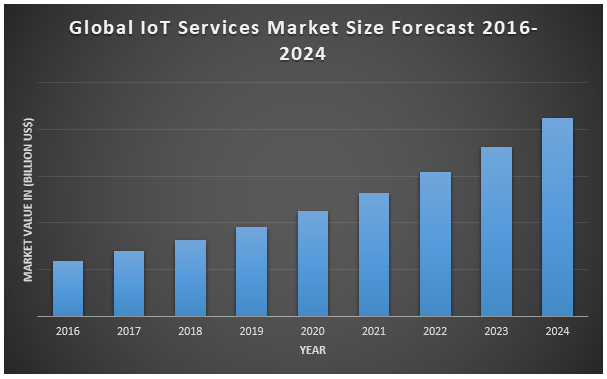
Global IoT Services Market – Industry Analysis and Forecast (2016-2024) - By Geography (North America, Europe, Asia Pacific, Latin America, Middle East & Africa - LAMEA)

Global IoT Services Market , formed the second largest component after IoT hardware that have changed the IoT functioning and application. ...